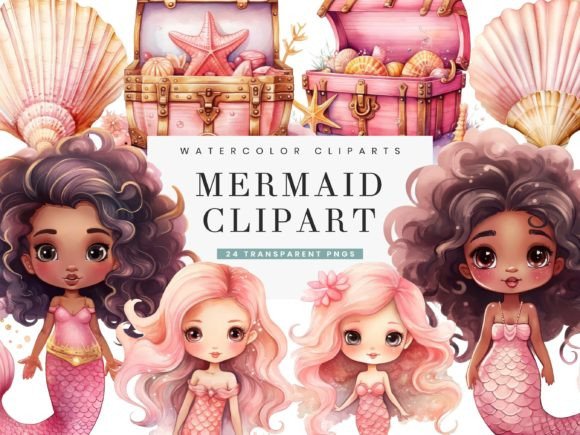
Watercolor Little Mermaid Clipart: A Creative Resource for Digital and Print Design
In the expansive world of digital design resources, few themes capture the imagination quite like the oceanic realm. The Watercolor Little Mermaid Clipart collection represents more than just a set of images; it is a versatile toolkit for creators seeking to infuse their projects with whimsy, elegance, and a touch of underwater magic. Whether you are a professional graphic designer, a small business owner creating branding materials, or a hobbyist engaged in scrapbooking, understanding how to effectively utilize these assets can significantly enhance the visual appeal of your work.
This article explores the practical applications, technical characteristics, and creative potential of watercolor mermaid illustrations. By moving beyond simple aesthetics, we will examine how these digital assets function within modern design workflows and why they have become a staple for those looking to add a hand-painted feel to digital mediums.
The Appeal of Hand-Painted Aesthetics in Digital Media
The resurgence of watercolor styles in digital design is not accidental. In an era dominated by sleek, vector-based minimalism, organic textures offer a sense of warmth and authenticity. Watercolor Little Mermaid Clipart leverages this trend by providing high-resolution scans of hand-painted artwork. The soft edges, subtle color bleeding, and transparent backgrounds allow these elements to blend seamlessly into various design contexts without appearing stiff or artificial.
For creators, the value lies in the versatility of the medium. Unlike rigid geometric shapes, watercolor illustrations possess a fluidity that mimics natural movement. This is particularly effective when depicting marine life, where the flow of hair, tails, and seaweed can be rendered with a grace that complements the subject matter. When integrated into a larger composition, these elements soften the overall look, making designs feel more approachable and inviting.
Technical Specifications and Quality Standards
When evaluating any digital asset, technical quality is paramount. A typical high-quality bundle, such as a 24-piece collection, should meet specific standards to ensure usability across different platforms. Here are the key technical features to look for:
- Resolution: Images should be provided at 300 DPI (dots per inch). This ensures that the clipart remains crisp and detailed when printed on physical materials like invitations, stickers, or posters.
- File Format: PNG files with transparent backgrounds are essential. Transparency allows designers to layer the mermaid illustrations over other graphics, patterns, or photos without unwanted white boxes surrounding the image.
- Color Profile: High-quality clipart usually utilizes vibrant, true-to-life colors that translate well from screen to print, maintaining the integrity of the original watercolor washes.
Understanding these specifications helps users avoid common pitfalls, such as pixelation in print projects or difficult editing processes due to opaque backgrounds. The inclusion of instant download capabilities further enhances the user experience, allowing for immediate integration into ongoing projects.
Practical Applications for Creators and Businesses
The utility of Watercolor Little Mermaid Clipart extends far beyond personal enjoyment. For professionals and entrepreneurs, these assets can serve as foundational elements in commercial products and marketing materials. Below are several real-world scenarios where these illustrations prove invaluable.
1. Event Stationery and Invitations
One of the most popular uses for mermaid-themed clipart is in the creation of event stationery. Birthday parties, baby showers, and bridal showers often adopt underwater themes. Designers can use these cliparts to create cohesive invitation suites, thank-you cards, and table markers. The soft watercolor style aligns perfectly with the delicate nature of these events, offering a sophisticated alternative to cartoonish alternatives.
2. Print-on-Demand Products
For owners of online stores, particularly those using print-on-demand services, unique clipart is a competitive advantage. Mermaid illustrations can be applied to:
- Apparel: T-shirts, tote bags, and swimwear covers.
- Home Decor: Pillows, wall art, and shower curtains.
- Accessories: Phone cases, journals, and stickers.
Because the images are high-resolution, they scale well for larger prints without losing detail, ensuring professional-quality end products.
3. Digital Content and Social Media
In the digital sphere, visual consistency is key to brand identity. Bloggers and social media influencers can use these cliparts to create eye-catching headers, story highlights, and post overlays. The enchanting nature of mermaids appeals to audiences interested in fantasy, lifestyle, and wellness niches, helping to increase engagement through visually appealing content.
Who Benefits Most from These Resources?
While anyone with an interest in design can appreciate these illustrations, specific groups stand to gain the most from incorporating Watercolor Little Mermaid Clipart into their workflow.
Graphic Designers: Professionals often face tight deadlines. Having a library of pre-made, high-quality elements allows for faster prototyping and execution of client projects, particularly those requiring illustrative components.
Educators and Parents: Teachers creating classroom materials or parents designing educational activities at home can use these images to make learning about marine biology or storytelling more engaging for children.
DIY Crafters: Individuals involved in scrapbooking, card making, and digital journaling find these cliparts indispensable. They provide a professional finish to handmade projects, elevating them from simple crafts to cherished keepsakes.
Considerations and Best Practices
To maximize the potential of these digital assets, users should adhere to certain best practices. First, always check the licensing agreement. While many bundles allow for commercial use, some may have restrictions on the number of units sold or require attribution. Understanding these legal boundaries protects creators from potential issues.
Second, consider color harmony. Watercolor illustrations often feature specific palettes. When combining multiple clipart elements, ensure that the colors complement each other and the background. If necessary, use basic photo editing software to adjust brightness, contrast, or hue to achieve a cohesive look.
Finally, think about composition. Because watercolor images have soft edges, they can sometimes get lost against busy backgrounds. Using negative space or solid-colored blocks behind the clipart can help the subject stand out, ensuring that the intricate details of the mermaid’s tail or facial features remain visible.
Conclusion
The Watercolor Little Mermaid Clipart bundle offers a blend of artistic charm and practical utility. By providing high-quality, transparent PNG files, it empowers users to create professional-grade designs with ease. Whether for commercial products, personal projects, or educational materials, these illustrations bring a unique, hand-crafted aesthetic to the digital world.
As the demand for authentic, organic design elements continues to grow, resources like these become increasingly valuable. By understanding their technical requirements and exploring diverse applications, creators can unlock new levels of creativity and efficiency in their work. Dive into the possibilities, and let the magic of watercolor enhance your next project.