Choosing the Right Baby Safari Animals Watercolor Clipart for Creative Projects
Digital design assets have become an essential component of modern creative workflows, bridging the gap between professional graphic design and accessible DIY projects. Among the vast array of available resources, Baby Safari Animals Watercolor Clipart has emerged as a popular choice for designers, crafters, and small business owners. This specific style combines the whimsical appeal of juvenile wildlife with the soft, organic textures of watercolor painting. Understanding the nuances of this asset type, its technical specifications, and how it compares to other digital illustration styles is crucial for making informed decisions about which resources best suit your project requirements.
Understanding the Aesthetic and Technical Composition
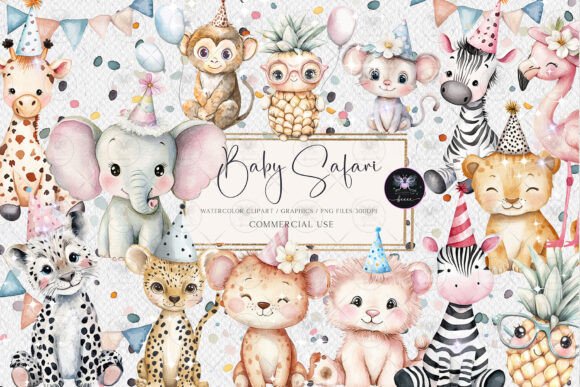
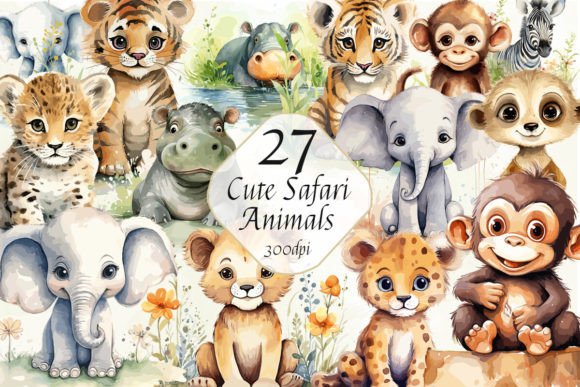
Watercolor clipart differs significantly from vector graphics or flat digital illustrations. The hallmark of Baby Safari Animals Watercolor Clipart is its textured appearance, characterized by soft edges, color bleeding, and variable opacity that mimics traditional paint on paper. This aesthetic creates a warm, inviting, and gentle mood, making it particularly suitable for projects targeting young audiences or conveying a sense of calm and nature.
When evaluating these assets, technical quality is paramount. High-quality sets, such as those offering 27 high-quality illustrations, typically provide files at 300 DPI (dots per inch). This resolution is the industry standard for printing, ensuring that images remain crisp and detailed when scaled to physical dimensions like greeting cards, posters, or apparel. Lower resolution files may appear pixelated or blurry when printed, undermining the professional look of the final product.
The inclusion of multiple file formats—PNG, SVG, AI, and EPS—adds significant versatility. PNG files with transparent backgrounds are ideal for quick drag-and-drop usage in consumer-level software like Canva or Microsoft Word. In contrast, SVG, AI, and EPS files are vector-based or editable formats that allow professional designers using Adobe Illustrator or similar tools to resize images infinitely without loss of quality, adjust color palettes, or isolate specific elements for custom compositions.
Comparing Watercolor Clipart to Alternative Styles
To determine if Baby Safari Animals Watercolor Clipart is the right fit, it is helpful to compare it with other common digital art styles. Each style offers distinct advantages and limitations depending on the intended application.
- Flat Vector Illustrations: These feature clean lines and solid colors. They are highly scalable and excellent for web icons, logos, and modern minimalist designs. However, they often lack the emotional warmth and tactile feel of watercolor, which can make them feel too corporate or sterile for baby showers or handmade gifts.
- Photorealistic Images: While realistic photos of animals offer high detail, they can be difficult to integrate into layered designs due to complex backgrounds and lighting mismatches. Watercolor clipart simplifies this by providing stylized subjects that blend more easily with text and other graphical elements.
- Hand-Drawn Sketches: Pencil or ink sketches offer a rustic, artistic vibe but may not convey the playful, colorful energy associated with baby-themed projects. Watercolor strikes a balance between artistic integrity and cheerful vibrancy.
The choice ultimately depends on the tone of the project. If the goal is to create a soothing, natural, and tender atmosphere, watercolor is often superior. For bold, high-contrast branding or technical diagrams, vector styles may be more appropriate.
Practical Applications and Use Cases
The versatility of Baby Safari Animals Watercolor Clipart allows it to be applied across a wide spectrum of creative endeavors. Its primary strength lies in its adaptability to both digital and physical mediums.
Print-on-Demand and Physical Products
One of the most common uses for these cliparts is in the creation of physical products. The 300 DPI resolution ensures that details remain sharp on items such as:
- Apparel: T-shirts and onesies benefit from the soft edges of watercolor, which print well on fabric using direct-to-garment (DTG) methods. The transparent background allows the design to sit naturally on colored fabrics without harsh white boxes.
- Home Decor: Wall art, nursery prints, and throw pillows often feature safari themes. The gentle color palette of watercolor complements neutral nursery decor trends.
- Paper Crafts: Greeting cards, invitations, and scrapbooking pages are traditional homes for watercolor art. The texture adds a premium, handmade feel to stationery.
Digital Design and Web Use
Beyond physical printing, these assets are valuable for digital interfaces. Website designs, blog headers, and social media graphics can utilize PNG files for quick integration. However, designers must note that watercolor textures can sometimes appear heavy on small mobile screens. In such cases, simplifying the composition or using SVG formats for cleaner rendering may be necessary.
Evaluating File Formats and Workflow Efficiency
Understanding the file types included in a clipart package is essential for workflow efficiency. A comprehensive set of Baby Safari Animals Watercolor Clipart typically includes PNG, SVG, AI, and EPS files. Each serves a different purpose in the design process.
PNG files are raster images with transparent backgrounds. They are ready to use immediately in most design software without additional editing. This format is ideal for users who do not have advanced graphic design skills or who need to complete projects quickly. The limitation is that PNGs cannot be resized larger than their original dimensions without losing quality.
SVG, AI, and EPS files cater to professional designers. SVG (Scalable Vector Graphics) is widely supported in web design and cutting machines like Cricut or Silhouette. AI and EPS are native formats for Adobe Illustrator, allowing for deep customization. Designers can adjust the hue of the watercolor wash, separate layers for complex animations, or convert the watercolor texture into masks for unique effects. For users who only need simple placement, these formats may be unnecessary, but for those seeking full creative control, they are invaluable.
Decision Factors: When to Choose Watercolor Clipart
Selecting the right asset involves weighing several factors. Here are key considerations to help determine if Baby Safari Animals Watercolor Clipart is the optimal choice for your needs.
- Target Audience: If the end viewer is children, parents, or individuals who appreciate artisanal aesthetics, watercolor is highly effective. For corporate or tech-focused audiences, it may appear too informal.
- Production Method: For digital-only use, ensure the file size is optimized for web loading speeds. For printing, verify that the DPI is 300. If you are using a home printer, test prints are recommended to check color accuracy, as watercolor tones can shift depending on paper type and ink quality.
- Customization Needs: If you plan to change colors significantly, vector-based watercolor simulations (often found in AI/EPS files) are better than static PNGs. However, true watercolor textures are difficult to recolor realistically without advanced editing skills.
- Licensing and Usage Rights: Always review the license agreement. Most clipart sets allow for personal and commercial use on physical products, but restrictions may apply to digital resale or trademarking. Ensure the provider grants clear rights for your intended use case.
Limitations and Considerations
While versatile, watercolor clipart is not without limitations. The organic, irregular edges that define the style can make precise alignment challenging in grid-based layouts. Additionally, the subtle color variations may not reproduce accurately on all printing substrates. Dark fabrics, for example, may require a white underbase layer to prevent the colors from appearing muted.
Furthermore, because watercolor styles are popular, there is a risk of overuse. To maintain uniqueness, designers should consider combining clipart elements with custom typography, background textures, or complementary graphic elements. Relying solely on pre-made clipart without modification can result in generic-looking designs.
Final Thoughts on Selecting Digital Assets
Incorporating Baby Safari Animals Watercolor Clipart into your creative toolkit offers a blend of artistic charm and practical utility. By understanding the technical specifications, such as 300 DPI resolution and transparent backgrounds, and recognizing the strengths of various file formats, you can maximize the potential of these assets. Whether designing invitations, creating custom apparel, or developing website visuals, the key is to match the asset’s aesthetic qualities with the project’s goals. Careful evaluation of alternatives and awareness of production constraints will ensure that the final output is both visually appealing and professionally executed.