Blue Ocean Animals, Underwater Creatures: Integrating Marine Clipart into Professional Design Workflows
In the realm of digital design and educational content creation, visual assets are not merely decorative; they are functional components that drive engagement, clarify concepts, and establish tone. Blue Ocean Animals, Underwater Creatures represents a specific category of digital resources that bridges the gap between aesthetic appeal and practical utility. For professionals ranging from graphic designers to educators, the challenge is rarely finding images, but rather finding high-quality, versatile assets that integrate seamlessly into existing workflows without causing technical friction or legal ambiguity.
This article explores how a curated collection of deep blue ocean animal cliparts can be strategically implemented across various professional and personal projects. We will examine the technical advantages of transparent PNG formats, discuss integration strategies for different industries, and provide actionable advice on maintaining consistency and quality control when using marine-themed imagery.
The Strategic Value of High-Quality Transparent Assets
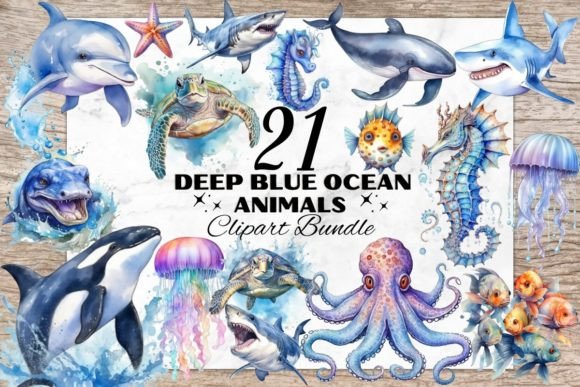
When selecting digital illustrations for commercial or educational use, the file format and background transparency are critical factors that determine efficiency. The Deep Blue Ocean Animals Cliparts collection features 21 high-quality PNG files with transparent backgrounds. This technical specification is vital for modern design processes.
Transparent backgrounds eliminate the need for time-consuming manual editing. In a typical workflow, a designer might spend significant hours masking out white or colored backgrounds from JPEGs to make them fit onto varied canvases. By utilizing pre-masked PNGs, you bypass this bottleneck entirely. This allows for immediate layering in software such as Adobe Photoshop, Illustrator, Canva, or Procreate. The result is a streamlined process where the focus remains on composition and messaging rather than technical cleanup.
Furthermore, high-resolution assets ensure scalability. Whether you are designing a small social media icon or a large-format classroom poster, the integrity of the image must remain intact. Pixelation undermines professionalism and readability. A meticulously crafted clipart set ensures that edges remain crisp and colors stay vibrant, regardless of the output medium.
Application Across Professional Verticals
The versatility of Blue Ocean Animals, Underwater Creatures allows it to fit into diverse project types. Understanding where these assets fit in your broader creative process helps maximize their return on investment.
Educational Content and E-Learning
Educators and instructional designers frequently require visual aids to explain complex biological concepts or to engage younger learners. Marine life offers a rich subject matter for teaching ecology, biology, and environmental science.
- Worksheet Enhancement: Use distinct illustrations of dolphins, whales, and fish to create labeling exercises or matching games.
- Presentation Decks: Integrate subtle marine elements into slide backgrounds to theme lessons without overwhelming text.
- Digital Flashcards: The transparent nature of the PNGs allows for clean isolation of individual species, making them ideal for Anki decks or Quizlet sets.
By incorporating these visuals, educators can reduce cognitive load for students, helping them associate textual information with clear visual representations. This aligns with dual-coding theory, which suggests that combining verbal and visual information enhances learning outcomes.
Marketing and Brand Identity
For marketers and small business owners, especially those in tourism, hospitality, or eco-friendly products, marine imagery can reinforce brand values. A travel agency specializing in coastal destinations might use these cliparts to create eye-catching invitations for launch events or to embellish digital newsletters.
The key here is consistency. When using Underwater Creatures in branding, ensure that the color palette of the cliparts complements your existing brand guidelines. If your brand uses specific shades of teal or navy, you may need to adjust the hue of the cliparts slightly to maintain visual harmony. This level of customization is easier when starting with high-quality source files.
Print-on-Demand and Merchandise
Entrepreneurs in the print-on-demand space can leverage these assets for product designs. From t-shirts to tote bags, marine themes are perennially popular. However, commercial viability depends on resolution and licensing. Since this collection is designed for both personal and commercial use, it removes the legal uncertainty often associated with free stock images. Always verify the specific license terms, but generally, having a dedicated asset pack allows for safer scaling of merchandise lines.
Workflow Integration and Best Practices
To effectively incorporate Blue Ocean Animals, Underwater Creatures into your routine, consider the following implementation steps. These practices focus on organization, efficiency, and long-term usability.
1. Asset Organization and Metadata
Upon downloading the 21 PNG files, do not simply leave them in your downloads folder. Create a dedicated directory within your digital asset management system. Name files descriptively (e.g., dolphin_leaping_transparent.png rather than IMG_001.png). This practice saves time during future searches and ensures that you can quickly locate specific creatures when working under tight deadlines.
2. Layering and Composition Techniques
When designing posters or digital artwork, avoid placing cliparts in isolation. Use them to guide the viewer’s eye. For instance, a majestic whale breaching the surface can be positioned to lead the eye toward a headline or call-to-action button. Experiment with opacity and blending modes to integrate the illustrations more naturally into photographic backgrounds. This creates a cohesive look rather than a collage of disjointed elements.
3. Color Harmony and Adjustment
While the cliparts are meticulously crafted, they may not always match the exact color scheme of your project. Use adjustment layers in your design software to tweak saturation, brightness, or hue. This ensures that the Deep Blue Ocean Animals feel like an intrinsic part of the design rather than an afterthought. Consistency in color temperature—whether warm or cool—helps unify the final output.
4. Quality Control Before Export
Before finalizing any project, zoom in to 100% to check for edge artifacts. Even with transparent PNGs, occasional halos can appear if the original masking was not perfect. High-quality collections minimize this, but it is good practice to verify. Additionally, ensure that the resolution matches your output requirements: 72 DPI for web and 300 DPI for print. If the source files are vector-based or high-resolution raster, you can scale down without loss, but scaling up beyond the original dimensions will degrade quality.
Enhancing Creativity Through Constraint
Having access to a vast library of images can sometimes lead to decision paralysis. A curated collection of 21 specific marine creatures offers a beneficial constraint. It forces creators to work within a defined visual language, which can actually boost creativity. Instead of searching endlessly for the "perfect" shark image, you work with what is available, focusing on layout, typography, and message.
This approach encourages resourcefulness. You might combine multiple elements from the pack to create new scenes, such as placing a dolphin near a coral reef element if included, or using the negative space around a whale to frame text. This iterative process of experimentation leads to unique designs that stand out in saturated markets.
Long-Term Utility and Maintenance
Digital assets are an investment. To maximize their value, revisit your clipart library periodically. As design trends evolve, so does the perception of certain styles. The timeless nature of realistic or well-stylized marine illustrations ensures they remain relevant longer than trendy, abstract graphics. Store backups of the original files in cloud storage to prevent data loss. Consider creating template files in your preferred design software that already include these assets, allowing for rapid deployment in recurring projects like monthly newsletters or weekly lesson plans.
In conclusion, Blue Ocean Animals, Underwater Creatures is more than a set of images; it is a tool for enhancing communication and aesthetic appeal. By understanding the technical benefits of transparent PNGs, integrating them thoughtfully into educational and marketing workflows, and maintaining rigorous organizational standards, you can elevate your projects efficiently. Whether you are designing a captivating poster or embellishing digital artwork, these cliparts provide the foundational elements needed to make a splash in any setting.